Application of Preferential Trade Origin Certificates in Bonded Logistics
I. Preferential Trade Certificates of Origin
A Certificate of Origin (CO) serves as the "economic nationality" and "passport" for goods in international trade. it is also "paper gold" for enterprises to enjoy tariff reductions and other preferential treatments.
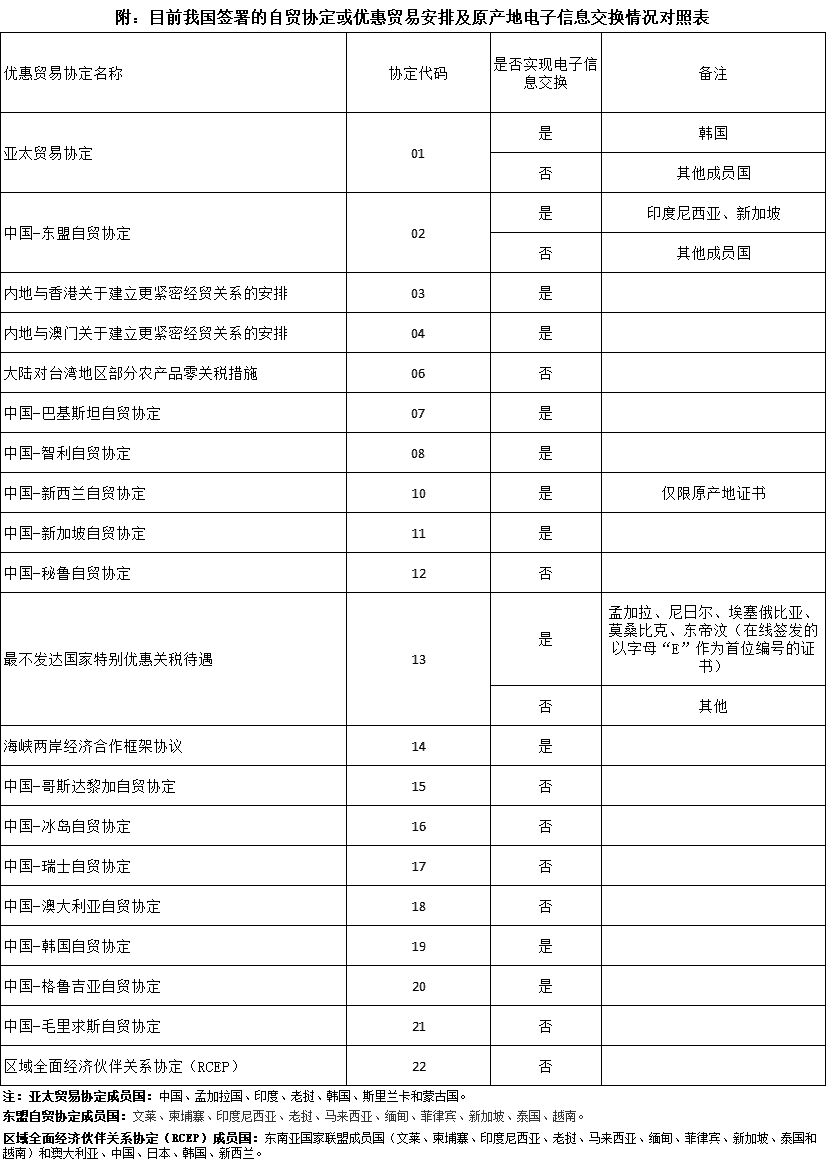
Preferential trade agreements are signed between two or more economies to further eliminate tariff and non-tariff barriers based on WTO Most-Favored-Nation (MFN) treatment, improve market access for services and investment, and achieve trade liberalization and economic integration. To date, China has signed 19 free trade agreements or preferential trade arrangements with 26 countries or regions. Among these, the Regional Comprehensive Economic Partnership (RCEP) is the most recent and influential.
II. Maintaining Preferential Status in the Bonded Sector
For goods imported under preferential trade agreements, the most important factor is maintaining their preferential status. The bonded sector offers two prominent advantages: policy advantages and locational advantages.
Policy Advantages: For goods entering the zone, the bonded area implements a "tax-free, bonded" policy. Even under preferential trade agreements, goods can maintain their preferential advantages after entering the zone. Goods for which valid origin evidence documents cannot be processed in time can still enter the zone first to enjoy the tax-free and bonded policies, and then enter the domestic market with preferential status once the relevant documents are completed. However, please note: if the actual inspection status of goods for domestic sale, compared to their status when entering the zone from abroad, exceeds the minor processing or handling range specified in the relevant agreement, they shall not enjoy the agreement or preferential tax rate.
Locational Advantages: The bonded sector has the unique advantage of being "within the territory but outside the customs." Goods in the zone always have a second option: "exiting the zone to go abroad," rather than being restricted to general trade import or return shipment upon arrival at the port.
III. Practical Application of Preferential Trade Goods in Bonded Areas
1. Entering the Zone
According to existing policies, the declaration for preferential trade agreement goods entering the zone is currently the same as for general cargo. However, electronic versions of origin evidence documents (e.g., commercial documents, transport documents, certificates of origin) must be attached as required. Although some agreements specify that origin documents may not need to be uploaded at the time of import, Customs reserves the right to verify them at any time. Therefore, we always recommend providing these documents. In summary, auditing these documents upon entry is crucial for subsequent preferential clearance into the domestic market.
For networked preferential trade origin certificates, some countries still issue paper certificates, but the electronic information is written off during import clearance. Therefore, when entering the zone, it is still necessary to check the electronic information of networked goods to prevent cases where only paper certificates are issued without electronic transmission.
The following image shows an example of origin electronic information received by the General Administration of Customs (using Georgia as an example):
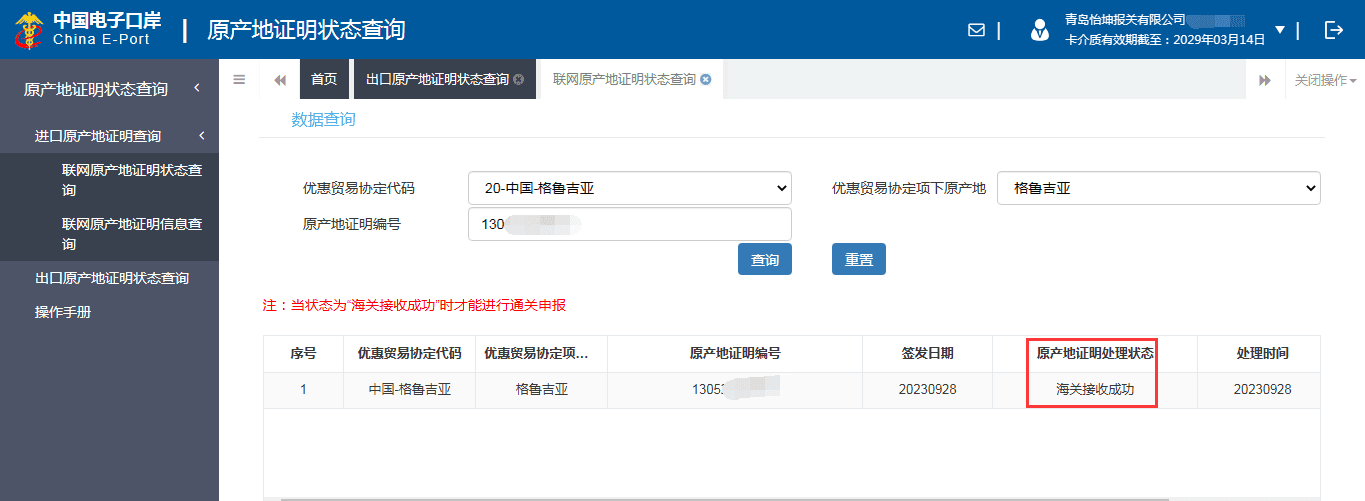
If it is discovered during the import process that electronic information for a networked certificate does not exist, do not worry; the goods can first be admitted to the bonded zone. This provides time to resolve the electronic information issue while enjoying tax-free and bonded status. In general trade imports, the only option would be to release the goods under a tax guarantee first.
2. Exiting the Zone
Since certificates of origin under preferential trade agreements exist in both networked and non-networked forms, networked certificates can use the certificate number directly due to the existence of electronic information.
For non-networked certificates using paperless declaration, filing information must be entered through the origin element declaration system. The system is shown below:
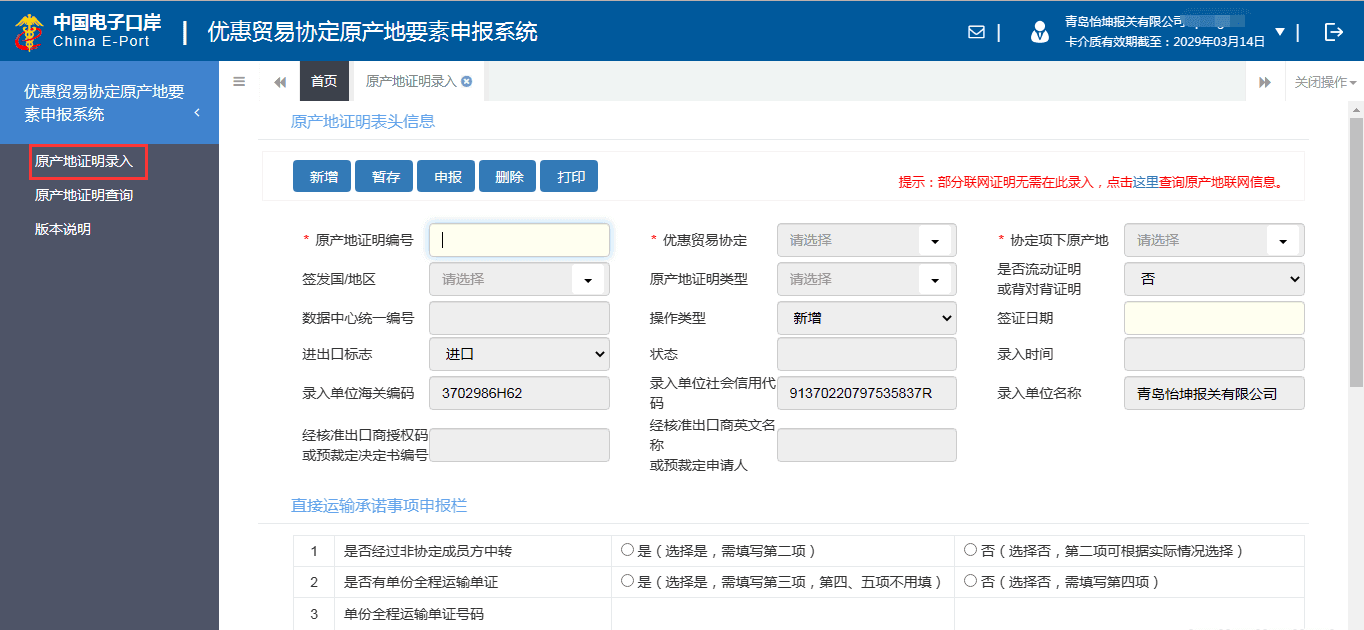
The origin element declaration system now supports batch write-off. For those with batch exit needs, the full quantity of the certificate should be filed during the initial registration. Once successfully filed, the electronic information can be used directly for subsequent exits until the quantity is exhausted.
The above is a summary of preferential trade origin rules and their application in the bonded sector. International trade professionals can operate based on the applicable agreements with their trading partners.